
Follow-up sequences
A follow-up sequence sends reminders automatically. You attach up to five extra emails to a campaign; each one is sent a few days after the previous one, to the recipients who match the condition you choose for it. The classic use is a nudge to everyone who did not open the first email, but a step can just as well go only to the people who clicked, or to everyone again.
Adding follow-ups
Section titled “Adding follow-ups”In the campaign builder, click Add follow-up in the bottom bar. A step appears under the editor:
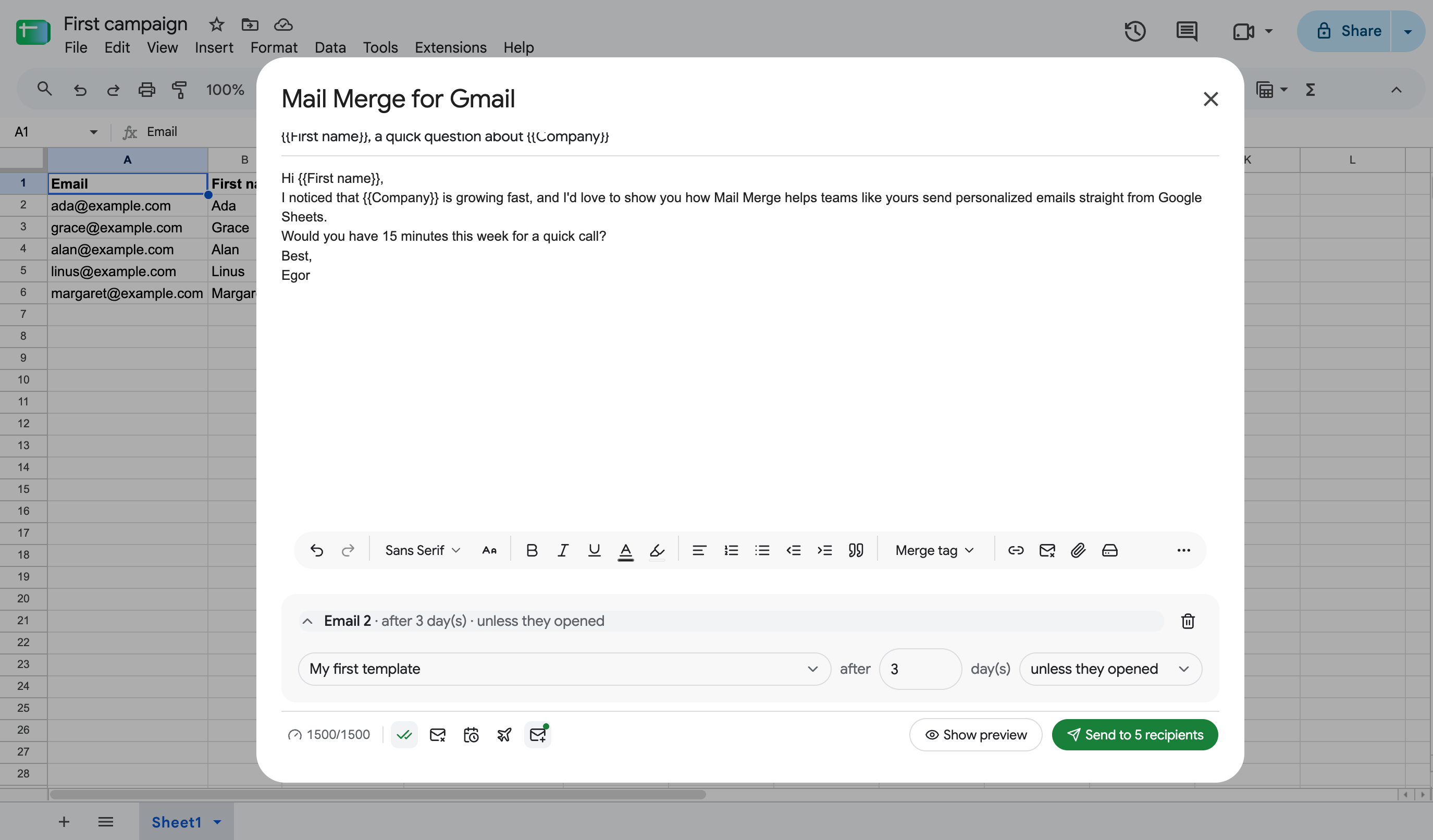
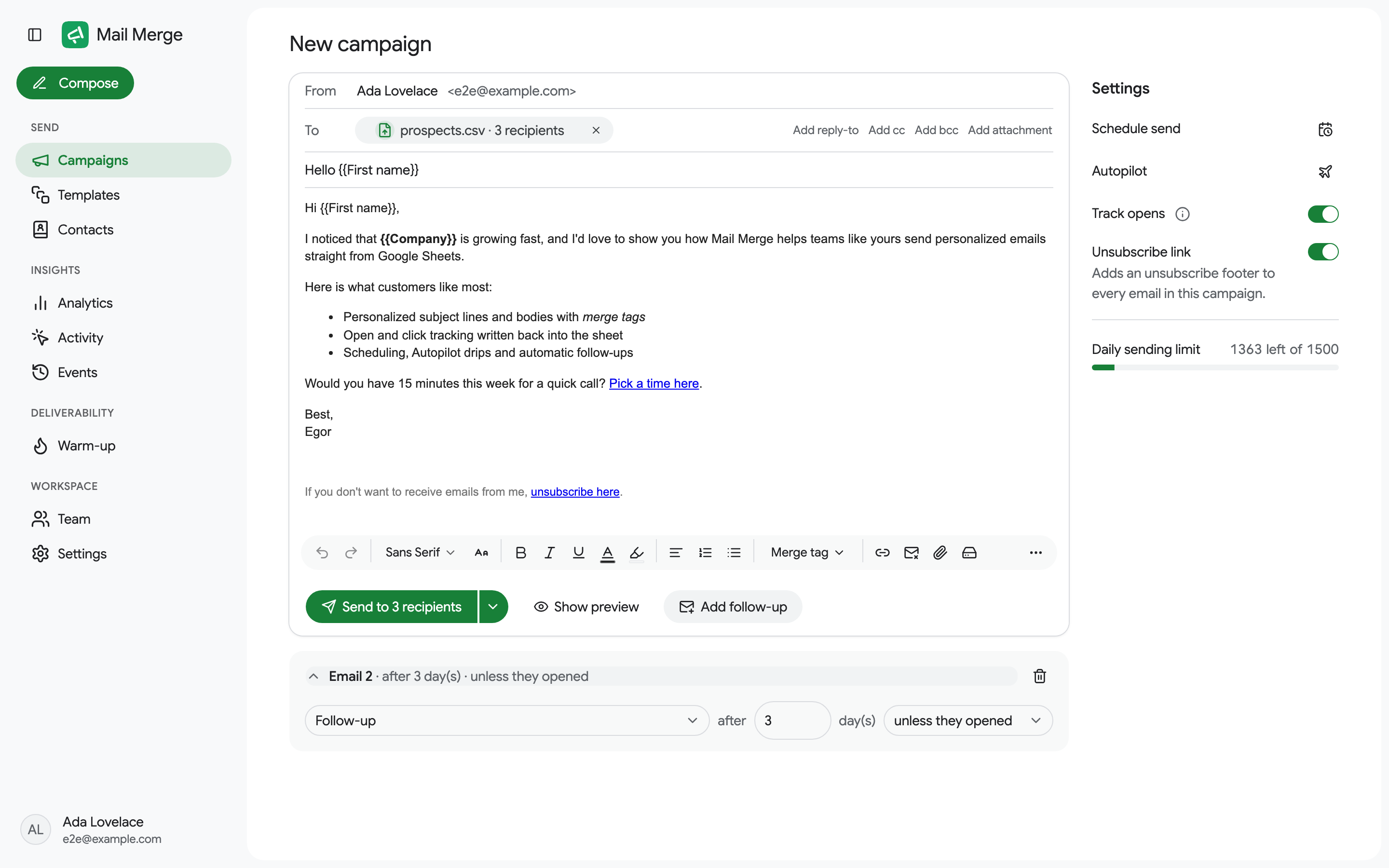
For each step choose:
- The template to send. Follow-ups always use a saved template; create one for each step first.
- The delay, 1 to 30 days after the previous email.
- The condition: who, judged against the previous email at the moment the step sends, still receives this one.
| Condition | Who gets the step |
|---|---|
| To everyone | Everyone the previous email reached. |
| To those who did not open | Recipients who neither opened nor clicked the previous email (the default). |
| To those who did not click | Recipients who did not click a link in it; an open alone is not enough to skip them. |
| To those who opened | Only the recipients who opened (a click counts as an open). |
| To those who clicked | Only the recipients who clicked a link. |
Click Add follow-up again for up to five steps, and the trash icon to remove one. Adding a follow-up turns Track opens on, since the conditions need tracking to know who reacted.
The send button stays disabled until every step has a template. The preview mentions how many follow-up emails will be scheduled.
How a sequence runs
Section titled “How a sequence runs”- The first email sends like any campaign: immediately or at the scheduled time.
- When a step’s delay elapses, Mail Merge decides the step’s audience from the previous email’s opens and clicks, then removes anyone who replied, bounced or unsubscribed, whatever the condition. The decision is made at send time, so a late open still counts.
- Each step appears as its own campaign in Campaigns, with a Follow-up badge. Opening any of them shows the Sequence funnel: per email, its condition and how many were sent, opened, clicked, replied, bounced, skipped and unsubscribed. For a step sent only to openers or clickers, the skipped count also says how many recipients did not meet the condition.
- In your sheet, a recipient skipped by a follow-up is marked Skipped (with the reason in the cell note), Replied or Bounced.
Follow-ups respect the same rules as any campaign: unsubscribers and blocked contacts are never emailed, and each step counts against your daily sending limit on the day it sends.
A/B testing the subject line
Section titled “A/B testing the subject line”The first email of a campaign can try two or three subject lines. Under the subject row, click A/B test subject and type a second (and optionally a third) subject. Recipients are split evenly between the subjects, in the order of your sheet; the body of the email is the same for everyone. A test email always uses subject A.
The campaign’s page then shows an A/B subject test card with, per subject, how many emails were sent, opened, clicked and replied to, and which subject is leading.
Tick Auto-pick the winner after 24 h on an Autopilot or auto-continue campaign to let Mail Merge switch the emails not sent yet to the subject with the best open rate: 24 hours after the first email went out, the subject that was opened the most takes over the rest of the campaign, and the card marks it as the winner. On a campaign sent in one go there is nothing left to switch, so the box is informational: you still see which subject won.
Follow-up steps cannot run their own A/B test; each uses its template’s subject.